
prof. Olivier De Wever (PhD)
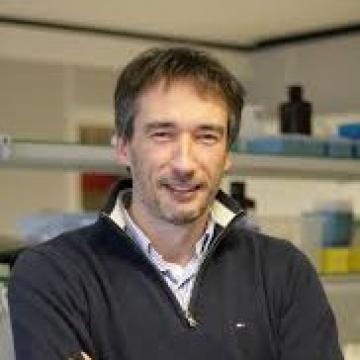
Principal investigator - Laboratory of Experimental Cancer Research
Full professor (Faculty of Medicine and Health Sciences, UGent)
Co-founder of CRIG and former chairman of the CRIG Steering Committee (2019-2022)
Research focus
His research focuses on tumor–microenvironment interactions, with particular emphasis on cancer-associated fibroblasts (CAFs) as dynamic regulators of tumor behavior and therapy response. His group develops advanced experimental models, including patient-derived 3D tumor tissue cultures to study tumor–stroma interactions and clinically relevant orthotopic xenograft models to investigate minimal residual disease following surgical removal of the primary tumor.
In addition, he initiated the MISpheroID consortium, which established widely adopted minimal information guidelines and step-by-step protocols for spheroid-based 3D cultures, improving standardization and reproducibility in cancer modelling.
His work further highlights the plasticity of CAFs, demonstrating different functional states in response to tumor- and therapy-derived cues, thereby creating opportunities for stromal reprogramming as a therapeutic strategy.
Biography
Olivier De Wever received a master degree in Pharmaceutical Sciences in 1999 and a PhD in Health Sciences in 2004. He obtained tenure in 2010 and has authored more than 225 peer-reviewed publications, including over 150 in the past decade, in leading journals such as Nature Methods, Nature Protocols, Nature Communications, Gut, and Cancer Research, as well as influential reviews in Cell Press Trends journals. He has an H-index of >55 (WOS) with over >25,000 citations (March 2026). He serves in multiple national and international boards. As head of the Clinical Tissue and Cell Culture Core Facility, he facilitates patient-derived tumor modelling and translational research, and coordinates the soft tissue sarcoma biobank supporting patient-relevant research. He further promotes the dissemination of advanced 3D culture methodologies by organizing a hands-on course at the European Molecular Biology Laboratory (EMBL).
Research team
Laboratory of Experimental Cancer Research
- prof. Olivier De Wever - principal investigator, full professor
- prof. An Hendrix - principal investigator, assistant professor
- dr. Kaj Sullivan (PhD) - post-doctoral fellow
- dr. Emiel De Jaeghere (MD, PhD) - post-doctoral fellow
- dr. Ana Lores Padin (PhD) - post-doctoral fellow
- dr. Stefanie Gijsels (MD, PhD) - post-doctoral fellow
- dr. Elena Catanzaro (PhD) - post-doctoral fellow
- dr. Sam Ernst (PhD) - post-doctoral fellow
- dr. Felix De Vuyst (PhD) - post-doctoral fellow
- Oriane Gillon - doctoral fellow
- Thibault Lootens – doctoral fellow
- Tine Depickere - doctoral fellow
- Marthe Calloens - doctoral fellow
- Jiaxin Luo - doctoral fellow
- Faye Naessens - doctoral fellow
- Mariia Saviuk - doctoral fellow
- Ellen Saeys - doctoral fellow
- Sara De Brée - doctoral fellow
- Louis Goutte - doctoral fellow
- Stephanie Decloedt - lab technician
- Johanna Mestach - lab technician
- Greet De Smet - lab technician
- Sándor Dedeyne - bio informatician
- Wendy De Rycke - secretary
Key publications
- Sequential orthogonal assays for longitudinal and endpoint characterization of three-dimensional spheroids. Nat Protoc. 2025. (PMID 40200041)
- The plasticity of cancer-associated fibroblasts. Trends Cancer. 2025. (PMID 40473532)
- Post-operative minimal residual disease models to study metastatic relapse in soft-tissue sarcoma patient-derived xenografts. Clinical Translational Medicine, 2023
- MISpheroID: a knowledgebase and transparency tool for minimum information in spheroid identity. Nature Methods 2021
- Heterocellular 3D scaffolds as biomimetic to recapitulate the tumor microenvironment of peritoneal metastases in vitro and in vivo. Biomaterials 2018
- Radiotherapy-Activated Cancer-Associated Fibroblasts Promote Tumor Progression through Paracrine IGF1R Activation. Cancer Res 2018
- Cancer-associated adipose tissue promotes breast cancer progression by paracrine Oncostatin M and Jak/STAT3 signaling. Cancer Res 2014
- Tumor-environment biomimetics delay peritoneal metastasis formation by deceiving and redirecting disseminated cancer cells. Biomaterials, 2015.
- Bone marrow-derived mesenchymal stem cells promote colorectal cancer progression through paracrine neuregulin 1/HER3 signaling. Gut, 2013.
- Tenascin-C and SF/HGF produced by myofibroblasts in vitro provide convergent pro-invasive signals to human colon cancer cells through RhoA and Rac. FASEB J., 2004
Contact & links
- Lab address:
Laboratory of Experimental Cancer Research,
Department of Human Structure and Repair,
Campus UZ Gent, Corneel Heymanslaan 10, The Core, ingang 37, 9000 Gent, Belgium - Member of the Consortium for Sarcoma Research Ghent (ConSaRGhent)
- prof. De Wever is interested to receive invitations for presentations or talks