
prof. Niki Rashidian (MD, PhD)
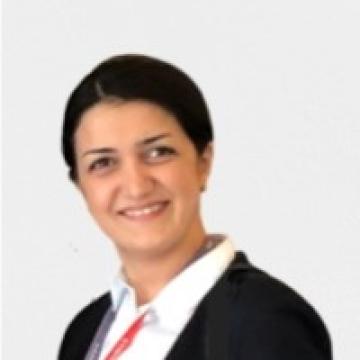
Hepatobiliary and pancreatic surgeon; Department of Hepatobiliary Surgery and Liver Transplantation, Ghent University Hospital
Professor of Innovative Computer-Assisted Surgery; Faculty of Medicine and Health Sciences, Ghent University
Director of Research and Skills Development; Orsi Academy
Group Leader; Training and Research Institute for Surgical Artificial Intelligence (TRISAI), Ghent University
Vice Chair; Innovation Committee, European-African Hepato-Pancreato-Biliary Association (E-AHPBA)
Research focus
Our research group focuses on improving the diagnosis, treatment and outcomes of patients with cancer, particularly cancers of the pancreas, liver, biliary system and peritoneum. These cancers often require complex surgery and multidisciplinary decision-making. Our goal is to make cancer care more precise, personalized and safe by combining clinical and surgical expertise with artificial intelligence, advanced imaging and data science.
We develop computer-vision and machine-learning methods that extract clinically useful information from medical images, surgical videos and routinely collected patient data. Our research includes the detection and characterization of cancer during minimally invasive surgery, prediction of whether a tumor can be completely removed, assessment of treatment response, and prediction of complications after surgery. By integrating imaging, clinical, genomic and pathological data, we aim to provide a more complete understanding of each patient’s disease and support better-informed treatment decisions.
We also investigate computer-assisted and robotic surgery, including objective assessment of surgical performance. This work aims to reduce variation in surgical quality and improve both technical performance and patient outcomes. Proficiency-based training is an important part of this approach, helping ensure that surgeons adopt complex procedures and new technologies safely. Through this multidisciplinary collaboration, we aim to translate technological innovation into trustworthy and equitable tools that address meaningful clinical needs and ultimately improve survival, recovery and quality of life for patients with pancreas and liver cancer.
Biography
Niki Rashidian is a Hepatobiliary and Pancreatic surgeon at Ghent University Hospital, with a particular clinical focus on robotic pancreatic surgery and the multidisciplinary treatment of pancreatic cancer. She is Professor of Innovative Computer-Assisted Surgery at Ghent University and leads TRISAI, where her research connects oncological surgery with 3D modelling, computer vision, artificial intelligence and surgical data science.
As Director of Research and Skill Development at Orsi Academy, she leads the development and evaluation of evidence-based training pathways for robotic surgery, including proficiency-based progression curricula, procedure-specific performance metrics, simulation and AI-based automated skills assessment. Her work aims to ensure that technological innovations are translated responsibly into cancer care and produce measurable benefits for surgical teams and patients.
She completed her medical and surgical training in Tehran, Iran. She subsequently pursued specialized fellowships in upper gastrointestinal surgery at Ghent University Hospital and minimally invasive hepatobiliary and pancreatic surgery at KU Leuven. She obtained her PhD at Ghent University, focusing on proficiency-based training and the use of computer science, 3D modelling and AI for precise preoperative planning of hepatobiliary tumors.
Research team
- dr. Thalia Petropoulou (MD, PhD) - post-doctoral fellow
- dr. Filip Gryspeerdt (MD) - doctoral fellow
- dr. Lennert Snijkers (MD) - doctoral fellow
- dr. Matthias Van Liefferinge (MD) - doctoral fellow
- dr. Nadila Erxiding (MD - doctoral fellow
- Seyed Amir Mousavi - doctoral fellow
- Robbe De Muynck - doctoral fellow
- Wenhao Dong - doctoral fellow
- dr. Pietro Pasquini (MD) - doctoral fellow
- Liesbet Delforge - study coordinator
Key publications
- Toward a Standardized Methodological Framework for Developing Computer Vision Models in Staging Laparoscopy. ARTIFICIAL INTELLIGENCE SURGERY 6 (2): 300–319.
- Multimodal machine learning for staging laparoscopy: a combined image analysis and morphologic tool for the discrimination of peritoneal metastasis. Int J Surg. 2026 Jan 1. PMCID: PMC12825761.
- Ethics and trustworthiness of artificial intelligence in Hepato-Pancreato-Biliary surgery: a snapshot of insights from the European-African Hepato-Pancreato-Biliary Association (E-AHPBA) survey. HPB (Oxford). 2024 Dec 21. PMID: 39827008.
- Machine learning improves prediction of postoperative outcomes after gastrointestinal surgery: a systematic review and meta-analysis. J Gastrointest Surg. 2024 Mar 12. PMID: 38556418.
- Prediction Models and Risk Calculators for Post-Hepatectomy Liver Failure and Postoperative Complications using a Diverse International Cohort of Major Hepatectomies. Ann Surg. 2023 May 25. PMID: 37226846.
- Role of preoperative 3D rendering for minimally invasive parenchyma sparing liver resections. HPB (Oxford). 2023 Apr 20:S1365-182X(23)00125-9. PMID: 37149483.
- Applications of machine learning in surgery: ethical considerations. Artificial Intelligence Surgery. 2022;2:18–23.
- Effectiveness of an immersive virtual reality environment on curricular training for complex cognitive skills in liver surgery: a multicentric crossover randomized trial. HPB (Oxford). 2022 Dec;24(12):2086-2095. PMID: 35961933.
- Using the Comprehensive Complication Index to Rethink the ISGLS Criteria for Post-hepatectomy Liver Failure in an International Cohort of Major Hepatectomies. Ann Surg. 2023 Mar 1;277(3):e592-e596. PMID: 34913896; PMCID: PMC9308484.
- Cancers Metastatic to the Liver. Surg Clin North Am. 2020 Jun;100(3):551-563. PMID: 32402300.
Contact & links
- TRISAI - Training and Research Institute for Surgical Artificial Intelligence
- Orsi Academy
- Ghent University research profile
- X
- ORCID
- Niki Rashidian is interested to receive invitations for presentations or talks